Yesterday my wife called me while I was driving home. It seems there was an electrical problem and power lines were arcing and sparking in the back yard. I arrived home to find that a limb from my back yard neighbor's pecan tree had shorted out on the 8 kV feed. In addition, it had burned the lines feeding my house. The limb was hanging and on fire.
I made a call to Entergy and punched the "3" option to signify an electrical emergency. After all, they had a line shorting out on a tree. The tree and ground around it could have been energized. I immediately told the operator that this was an emergency involving live power lines in a residential area. I might as well have been talking to my hand. They had to go through their entire list of questions before telling me that they would report my "outage" and that someone would be there within an hour or so. "NO", I told him, "this is an emergency - you need to get someone here ASAP. There are live wires arcing and sparking." No use, the operator could have cared less. As far as he was concerned, this was an outage that required no unusual measures.
In the meantime, my other neighbor had called the local fire station. They, of course, could do nothing with live wires about. A deputy showed up and went around the neighborhood to warn folks to stay inside until the problem was fixed. Since we didn't have any power, my wife and I decided to go out to eat. When we returned about 2 hours later, the repair crew was on site and had finished half of the splice required to fix the wires - and trimmed the tree. I don't know whether they had responded to my call or if our fire department had brought them out.
The lesson, our public utilities hire idiots to work the phones so if you see something dangerous happening, just run the other way!
Tuesday, August 10, 2010


Head Count
As of the end of July, 2010, the Kingdom of Saudi Arabia has beheaded 17 people. But don't feel too badly. They were either murderers or rapists.
The Kingdom is way down from last year. By this time last year they had separated 46 heads from their torsos.
The Kingdom is way down from last year. By this time last year they had separated 46 heads from their torsos.
Friday, July 30, 2010
Image of Hero Destroyed
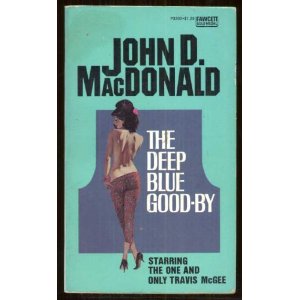
I just read that Oliver Stone has a project to turn "The Deep Blue Good-by" into a movie titled "Travis McGee". It will feature Leonardo DiCaprio in the lead role.
Never did I ever picture the famous salvage consultant as looking like Leonardo DiCaprio. That has got to be some of the worst casting ever. I will give it a pass. Not only do I think Oliver Stone is a socialist a'hole but I don't want to destroy my mental image of Travis McGee.
Never did I ever picture the famous salvage consultant as looking like Leonardo DiCaprio. That has got to be some of the worst casting ever. I will give it a pass. Not only do I think Oliver Stone is a socialist a'hole but I don't want to destroy my mental image of Travis McGee.
Wednesday, July 28, 2010
The Moratorium and Well Emergency Response:A Conundrum
Now that they seem to have the blowout under control and close to being killed, it would be a good time to take a look back at the technology used at the well, the government's contention of that the oil industry was not capable of responding to a blowout in deep water and how the moratorium may affect future response capability.
The ROVs: BP was able to muster some 14 deep water work ROVs and have them working 24/7 at a depth of 5000 feet. They were used to perform some heavy and complicated tasks. We watched as they moved heavy shears into place to cut the riser. They used a diamond saw to try to cut the flange. They positioned various caps on top of the leaks. They removed the bolts from the flange on the BOP and installed and bolted on a new flange. Then they guided the new cap into position. This may have been the first time this work was done at 5000 feet, but the operators knew how to drive their machines and water depth to them was irrelevant.
The relief wells: BP was able to muster two deep water drilling rigs and all the pipe, mud, cement and other materials necessary two drill relief wells - within days of the blowout. That was an astonishing accomplishment and one that was never recognized.
In addition, there was a fleet of specialized vessels that was mobilized to fight the spill or try to kill the well. There is no doubt that the industry has learned what works and what does not. Already you see a consortium of companies agreeing to pool resources to build equipment that could be used to help contain a future blowout.
And that brings us to the moratorium conundrum.
The only reason these resources were available was because the Gulf of Mexico was a center for deep water exploration. Had it not been such a center, there would have been few vessels, material or personnel available. Now, with the moratorium, the deep water capable rigs, and their support vessels and personnel, will be leaving the Gulf of Mexico. The effect will that the industry will less able to respond to a future incident. The machines, men and material necessary won't be nearby or readily obtainable. The moratorium, instead of protecting the Gulf of Mexico, will have the end result of increasing the risk of deep water drilling here.
The ROVs: BP was able to muster some 14 deep water work ROVs and have them working 24/7 at a depth of 5000 feet. They were used to perform some heavy and complicated tasks. We watched as they moved heavy shears into place to cut the riser. They used a diamond saw to try to cut the flange. They positioned various caps on top of the leaks. They removed the bolts from the flange on the BOP and installed and bolted on a new flange. Then they guided the new cap into position. This may have been the first time this work was done at 5000 feet, but the operators knew how to drive their machines and water depth to them was irrelevant.
The relief wells: BP was able to muster two deep water drilling rigs and all the pipe, mud, cement and other materials necessary two drill relief wells - within days of the blowout. That was an astonishing accomplishment and one that was never recognized.
In addition, there was a fleet of specialized vessels that was mobilized to fight the spill or try to kill the well. There is no doubt that the industry has learned what works and what does not. Already you see a consortium of companies agreeing to pool resources to build equipment that could be used to help contain a future blowout.
And that brings us to the moratorium conundrum.
The only reason these resources were available was because the Gulf of Mexico was a center for deep water exploration. Had it not been such a center, there would have been few vessels, material or personnel available. Now, with the moratorium, the deep water capable rigs, and their support vessels and personnel, will be leaving the Gulf of Mexico. The effect will that the industry will less able to respond to a future incident. The machines, men and material necessary won't be nearby or readily obtainable. The moratorium, instead of protecting the Gulf of Mexico, will have the end result of increasing the risk of deep water drilling here.
Monday, July 26, 2010
Another Dubai Jail Story
The Times Picayune had this news about a local man who had been held in a Dubai jail for 4 years.
It started with vague threats and harassment, Lionel Lombard Jr. says. Then he noticed he was being followed. At night, as he walked around the small lake in his neighborhood, men would jump out of bushes to scare him. Things began to escalate when he was refused entry to the United Arab Emirates community where he was living and working. Lombard challenged the denial, only to see the harassment intensify.
That was only the beginning of a four-year battle for freedom that the New Orleanian living in Dubai outlined in a lawsuit he filed in California this month against the owner of the property he used to call home.
Lombard, a public relations consultant, complained about the way his landlord, Emaar Properties, would go to keep him silent.
What began as intimidation culminated in what he claims were bogus criminal charges resulting in two years of imprisonment and torture.
In an e-mail message to the Reuters news agency, Emaar said simply: "The allegations are baseless and the company does not wish to comment."
Lombard said his troubles started when he was falsely accused of making a suggestive hand gesture to a woman. He was jailed for three months. When a friend bailed him out, the friend was told Lombard was not an American. Lombard said he was frequently mocked because of his race: "You are not an American, you are black," people said.
When he was released, he had lost his job and had been blacklisted from being able to find a new job, he said. He was also banned from leaving the country. Then he was evicted and denied access to his house, he alleges in the lawsuit.
When he went to the U.S. Embassy to seek assistance, his home was ransacked. The locks were changed. He relocated to neighboring Abu Dhabi.
For the next year and a half, Lombard attempted to move on. He began to promote a new fashion label. ""I put it behind me and moved forward," he said. "That's how I am."
In May 2008, he went to meet with a potential investor. At the meeting, members of the Emirati Criminal Investigative Department approached him and told him he was wanted in Dubai.He was taken to the police station, where he was arrested in relation to a "financial dispute."
his lawsuit says he was shackled at the hands and the ankles for six days. During that time, he was harassed constantly and kept from sleeping, he alleges.
He remained behind bars for 20 months, according to the suit.
The U.S Embassy had a difficult time determining what the charges against him were. When Lombard tried to obtain a jail certificate, he describes being "savagely beaten by six policemen."
Dubai Deputy Police Chief Khamis al-Mazeina told Reuters the allegations about Lombard's treatment were untrue.
"We strongly deny those accusations. Dubai police does not torture anybody .... This is all a figment of his imagination and entirely baseless."
On Feb. 3, 2010, all charges were dropped and Lombard was allowed to return home to New Orleans. The exact chain of events and parties involved in his release remain a mystery.
By filing a lawsuit and writing a book about his experiences, Lombard said he hopes to bring attention not only to the mistreatment by Emaar of its employees, but also to the practice of holding foreigners without evidence.
"It goes beyond greed," he said. "Everyone knows what is going on but turns a blind eye. I refuse to turn a blind eye. I stood up to them even though a lot of people said, 'You will get yourself killed.'"
Some people may think this story is far fetched. As someone who has lived in Dubai for an extended period of time, I find it perfectly credible. One of the first things you learn in Dubai is that it is against the law to say anything negative about the Sheikh or his family. I know that sounds outrageous but it is true. The second thing you learn is that the Sheikh owns everything in Dubai. He is, after all, the Sheikh. Therefore, if you say something negative about any institution in Dubai, you are saying it about the Sheikh and you are breaking the law.
The news is full of people who have been jailed in Dubai for infractions we in the west find ridiculous - making out on the beach, giving someone the finger, drinking too much or having cold medicine in your baggage. And there are also stories about businessmen who unknowingly found themselves on the wrong side of a financial transaction.
The bottom line is that the laws there are much different and your status as an American is meaningless. And Dubai, for all their public relations, is not the free and open society they appear to be.
It started with vague threats and harassment, Lionel Lombard Jr. says. Then he noticed he was being followed. At night, as he walked around the small lake in his neighborhood, men would jump out of bushes to scare him. Things began to escalate when he was refused entry to the United Arab Emirates community where he was living and working. Lombard challenged the denial, only to see the harassment intensify.
That was only the beginning of a four-year battle for freedom that the New Orleanian living in Dubai outlined in a lawsuit he filed in California this month against the owner of the property he used to call home.
Lombard, a public relations consultant, complained about the way his landlord, Emaar Properties, would go to keep him silent.
What began as intimidation culminated in what he claims were bogus criminal charges resulting in two years of imprisonment and torture.
In an e-mail message to the Reuters news agency, Emaar said simply: "The allegations are baseless and the company does not wish to comment."
Lombard said his troubles started when he was falsely accused of making a suggestive hand gesture to a woman. He was jailed for three months. When a friend bailed him out, the friend was told Lombard was not an American. Lombard said he was frequently mocked because of his race: "You are not an American, you are black," people said.
When he was released, he had lost his job and had been blacklisted from being able to find a new job, he said. He was also banned from leaving the country. Then he was evicted and denied access to his house, he alleges in the lawsuit.
When he went to the U.S. Embassy to seek assistance, his home was ransacked. The locks were changed. He relocated to neighboring Abu Dhabi.
For the next year and a half, Lombard attempted to move on. He began to promote a new fashion label. ""I put it behind me and moved forward," he said. "That's how I am."
In May 2008, he went to meet with a potential investor. At the meeting, members of the Emirati Criminal Investigative Department approached him and told him he was wanted in Dubai.He was taken to the police station, where he was arrested in relation to a "financial dispute."
his lawsuit says he was shackled at the hands and the ankles for six days. During that time, he was harassed constantly and kept from sleeping, he alleges.
He remained behind bars for 20 months, according to the suit.
The U.S Embassy had a difficult time determining what the charges against him were. When Lombard tried to obtain a jail certificate, he describes being "savagely beaten by six policemen."
Dubai Deputy Police Chief Khamis al-Mazeina told Reuters the allegations about Lombard's treatment were untrue.
"We strongly deny those accusations. Dubai police does not torture anybody .... This is all a figment of his imagination and entirely baseless."
On Feb. 3, 2010, all charges were dropped and Lombard was allowed to return home to New Orleans. The exact chain of events and parties involved in his release remain a mystery.
By filing a lawsuit and writing a book about his experiences, Lombard said he hopes to bring attention not only to the mistreatment by Emaar of its employees, but also to the practice of holding foreigners without evidence.
"It goes beyond greed," he said. "Everyone knows what is going on but turns a blind eye. I refuse to turn a blind eye. I stood up to them even though a lot of people said, 'You will get yourself killed.'"
Some people may think this story is far fetched. As someone who has lived in Dubai for an extended period of time, I find it perfectly credible. One of the first things you learn in Dubai is that it is against the law to say anything negative about the Sheikh or his family. I know that sounds outrageous but it is true. The second thing you learn is that the Sheikh owns everything in Dubai. He is, after all, the Sheikh. Therefore, if you say something negative about any institution in Dubai, you are saying it about the Sheikh and you are breaking the law.
The news is full of people who have been jailed in Dubai for infractions we in the west find ridiculous - making out on the beach, giving someone the finger, drinking too much or having cold medicine in your baggage. And there are also stories about businessmen who unknowingly found themselves on the wrong side of a financial transaction.
The bottom line is that the laws there are much different and your status as an American is meaningless. And Dubai, for all their public relations, is not the free and open society they appear to be.
Sunday, July 25, 2010
More Commuting
In the mid 90s, I made several visits to an oil and gas production platform in Cook Inlet, Alaska. My employer owned a majority stake in the facility but did not operate it. Our operating partner had undertaken a major revamp of the facility in order to make it possible to drill into a newly discovered portion of the reservoir and increase production. They had done a poor job of cost estimating and cost control and had no idea what the final costs would be. I was sent there to review the project and try to determine what our share of the final costs would be. Every morning, I would report to the heliport and climb into a neoprene survival suit for the helicopter flight to the platform. The process would be repeated in the evening.
About that same time, our CEO was starting an initiative to revise salaries for his engineers. Some brilliant business school savant had convinced him that oil and gas engineers were overpaid and we should be paid on a par with our counterparts in manufacturing - companies like HP or TI.
Every time I crawled into that damn suit, I said a silent curse to him. I wanted to tell him that when a Hewlett Packard engineer's transportation fails on his way to the office, he calls AAA and gets a tow truck. When my transportation fails, I take a swim in freezing water - and that's why we deserve more money!
About that same time, our CEO was starting an initiative to revise salaries for his engineers. Some brilliant business school savant had convinced him that oil and gas engineers were overpaid and we should be paid on a par with our counterparts in manufacturing - companies like HP or TI.
Every time I crawled into that damn suit, I said a silent curse to him. I wanted to tell him that when a Hewlett Packard engineer's transportation fails on his way to the office, he calls AAA and gets a tow truck. When my transportation fails, I take a swim in freezing water - and that's why we deserve more money!
Tuesday, July 20, 2010
Executive Order 13366
The president signed a new Executive Order yesterday. The news about it got buried in the congressional wranglings concerning extending jobless benefits and the news of the cap on the oil spill. However, this order could have a profound affect on you if you make your living from the sea. It says in part:
This order adopts the recommendations of the Interagency Ocean Policy Task Force, except where otherwise provided in this order, and directs executive agencies to implement those recommendations under the guidance of a National Ocean Council. Based on those recommendations, this order establishes a national policy to ensure the protection, maintenance, and restoration of the health of ocean, coastal, and Great Lakes ecosystems and resources, enhance the sustainability of ocean and coastal economies, preserve our maritime heritage, support sustainable uses and access, provide for adaptive management to enhance our understanding of and capacity to respond to climate change and ocean acidification, and coordinate with our national security and foreign policy interests.
This order also provides for the development of coastal and marine spatial plans that build upon and improve existing Federal, State, tribal, local, and regional decision making and planning processes. These regional plans will enable a more integrated, comprehensive, ecosystem-based, flexible, and proactive approach to planning and managing sustainable multiple uses across sectors and improve the conservation of the ocean, our coasts, and the Great Lakes.
Go read the whole thing here.
Note the term "coastal and marine spatial plan". This means that the ocean will be divided in to zones, that operate much like onshore zoning ordinances. In other words, certain activities will only be allowed in specific areas zoned for that activity. Then look at the term "ecosystem-based". This means that the use of that zone will be determined by its ecology and not national need or the economy. And when it says "build upon and improve existing Federal, State, tribal, local, and regional decision making and planning processes", I take that to mean that it will override these existing procedures.
For comparison, the old MMS used the concept of "multiple use". That is, no single activity could pre-empt any other activity. Under this concept, oil development activities had to take place using facilities that were compatible with other uses. For example, seafloor structures had to be built to allow trawls to pass over them without snagging. Under this new order, trawling could be limited to only certain areas. And if they determine that the ecology of that area demands it (i.e., low shrimp populations or benthic organisms), trawling could be prevented entirely. Note the sentence "ensure the protection, maintenance, and restoration of the health of ocean, coastal, and Great Lakes ecosystems". This defines the main objective of the new ocean policy and it has nothing to do with extracting minerals, farming the sea or using the ocean for recreation.
The National Ocean Council formed under this Executive Order will have the ability to limit where you fish, where you can explore for oil, where you can site wind farms or any other activity, commercial or recreational, that takes place upon the water.
A big piece of freedom has been taken away from you and you don't even know about it because the media failed to cover it.
This order adopts the recommendations of the Interagency Ocean Policy Task Force, except where otherwise provided in this order, and directs executive agencies to implement those recommendations under the guidance of a National Ocean Council. Based on those recommendations, this order establishes a national policy to ensure the protection, maintenance, and restoration of the health of ocean, coastal, and Great Lakes ecosystems and resources, enhance the sustainability of ocean and coastal economies, preserve our maritime heritage, support sustainable uses and access, provide for adaptive management to enhance our understanding of and capacity to respond to climate change and ocean acidification, and coordinate with our national security and foreign policy interests.
This order also provides for the development of coastal and marine spatial plans that build upon and improve existing Federal, State, tribal, local, and regional decision making and planning processes. These regional plans will enable a more integrated, comprehensive, ecosystem-based, flexible, and proactive approach to planning and managing sustainable multiple uses across sectors and improve the conservation of the ocean, our coasts, and the Great Lakes.
Go read the whole thing here.
Note the term "coastal and marine spatial plan". This means that the ocean will be divided in to zones, that operate much like onshore zoning ordinances. In other words, certain activities will only be allowed in specific areas zoned for that activity. Then look at the term "ecosystem-based". This means that the use of that zone will be determined by its ecology and not national need or the economy. And when it says "build upon and improve existing Federal, State, tribal, local, and regional decision making and planning processes", I take that to mean that it will override these existing procedures.
For comparison, the old MMS used the concept of "multiple use". That is, no single activity could pre-empt any other activity. Under this concept, oil development activities had to take place using facilities that were compatible with other uses. For example, seafloor structures had to be built to allow trawls to pass over them without snagging. Under this new order, trawling could be limited to only certain areas. And if they determine that the ecology of that area demands it (i.e., low shrimp populations or benthic organisms), trawling could be prevented entirely. Note the sentence "ensure the protection, maintenance, and restoration of the health of ocean, coastal, and Great Lakes ecosystems". This defines the main objective of the new ocean policy and it has nothing to do with extracting minerals, farming the sea or using the ocean for recreation.
The National Ocean Council formed under this Executive Order will have the ability to limit where you fish, where you can explore for oil, where you can site wind farms or any other activity, commercial or recreational, that takes place upon the water.
A big piece of freedom has been taken away from you and you don't even know about it because the media failed to cover it.
Subscribe to:
Posts (Atom)
